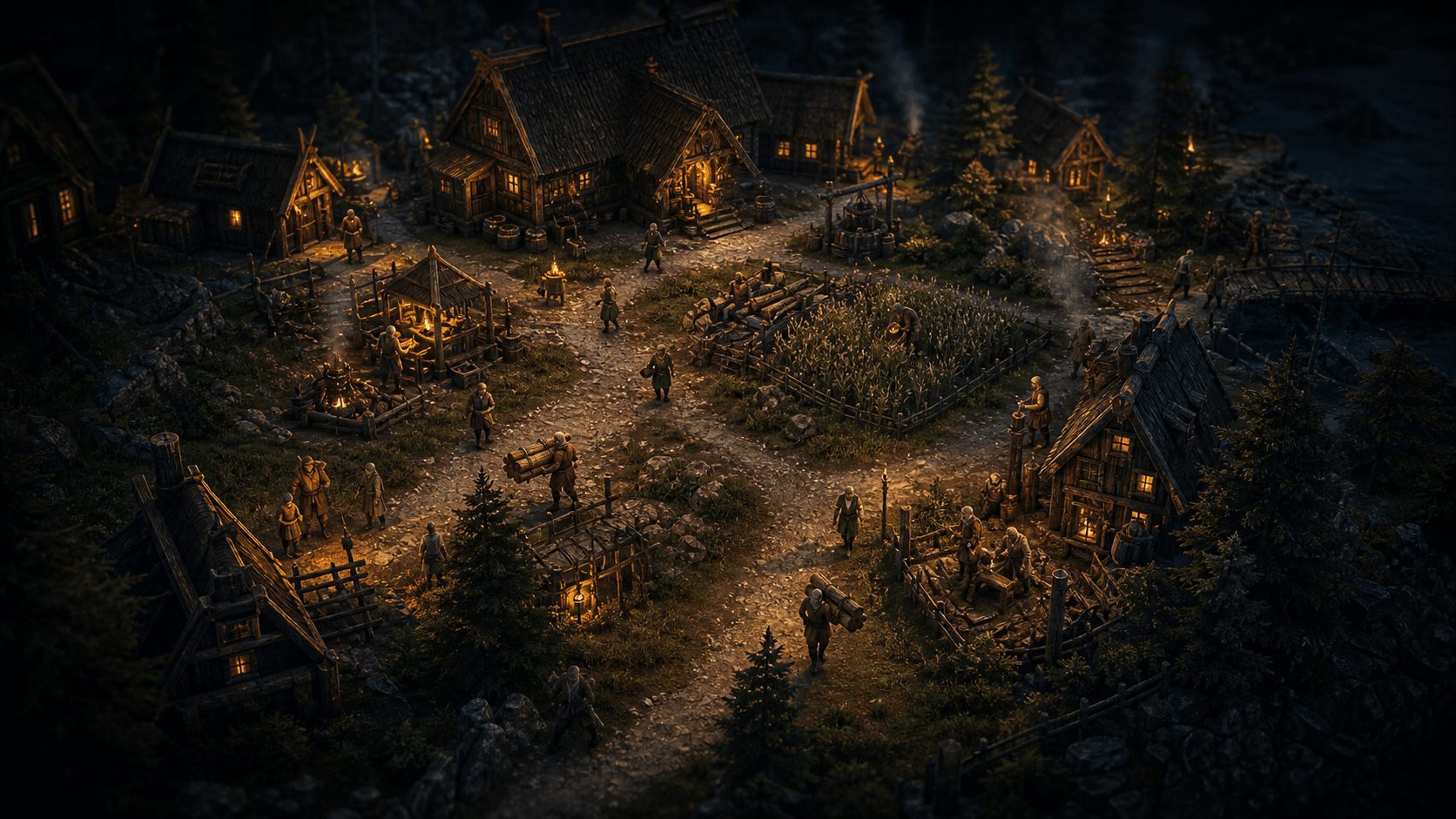
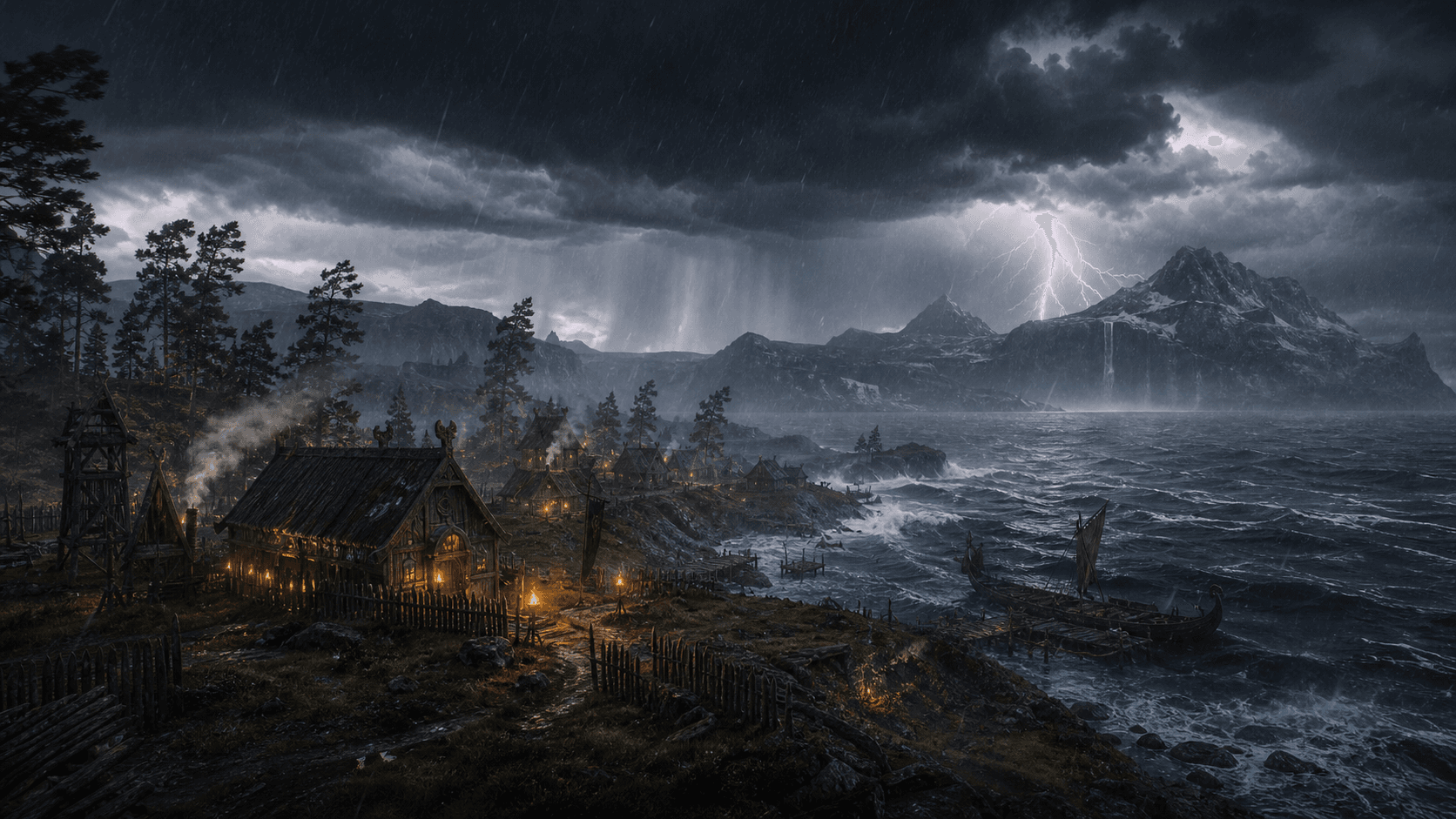
An in-development Unity survival-settlement project about rebuilding a damaged shoreline home into the first heart of a village. Its design connects villager work, farming, hauling and rest with time, weather, warmth, safety and social pressure while the prototype continues to grow.
The page frames Ashen Hearth as a survival-settlement game in active production: one small homestead first, then deeper village logistics, villager routines and world pressure layered into a place that feels worth protecting.
Development status: Ashen Hearth is an active prototype. This page describes its current visual foundation and design targets; linked technical notes clearly distinguish reusable DTWorldz system experiments from features verified as integrated into this game.
In-Game View
The first heart of a village
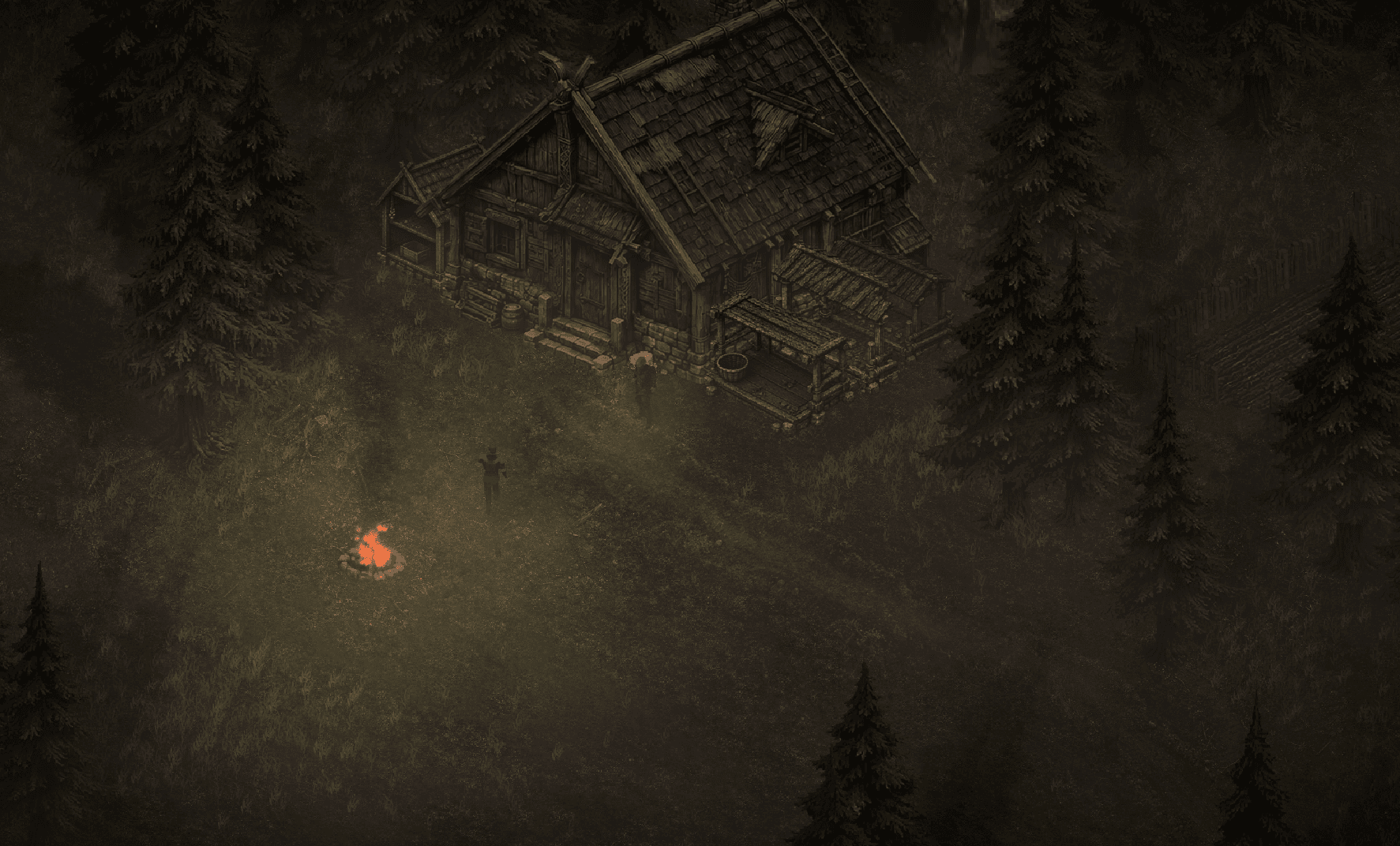
A compact homestead, campfire and forest edge give the current authored setting a clear center before the world grows outward.
Game Direction
Survival first, settlement growth second
Ashen Hearth is not trying to start as a giant strategy layer. The focus is a grounded first loop: keep people warm, fed, rested and sheltered while the settlement slowly becomes more capable.
The village fantasy comes from connected pressure. A cold night matters because the fire matters. Food matters because villagers need time and labor to produce it. Logistics matter because survival should be visible in the world, not hidden behind a spreadsheet.
The Hearth
A small fire becomes the first center of village life
Ashen Hearth begins with a damaged shoreline home rather than a finished kingdom. The campfire is both practical and emotional: a place for warmth, recovery, food pressure and the first feeling that the settlement can survive another night.

Daily Work
Villagers make the settlement feel occupied before it feels large
The design direction favors readable routines over noisy scale. Villager behavior is being shaped around gathering, farming, hauling, rest, fire upkeep and work needs so the homestead can feel lived in as the prototype grows.
Weather
Atmosphere is part of the pressure, not just scenery
Fog, rain, snow, storms and day-night rhythm are designed to change the tone of play. Weather helps the world communicate risk, comfort and isolation while supporting survival decisions through readable presentation.

Systems
The design promise is built from readable systems
The core feature list is strongest when it reads like a survival map. Each system supports the same goal: make a small, harsh place feel alive enough that the player wants to guide it through the next day.
Survival Homestead
The first playable-loop target connects warmth, food, shelter, recovery and scarce resources.
Village Logistics
The logistics direction uses stockpiles, pantries, construction sites, hauling and storage to support settlement growth.
Authored World Layers
Hand-built homestead spaces provide the authored foundation for pathfinding, weather, grass response and atmosphere.
Dynamic Weather
Time, seasons, storms, fog, rain and snow form the intended weather-pressure model.
Farming
The farming design explores growing food, managing fields and surviving seasonal pressure.
Fishing
The coastal design treats docks, boats and fishing as a future food-production lifeline.
NPC AI
The AI direction uses goal-oriented villagers for gathering, farming, hauling, rest, fire upkeep and simple orders.
Exploration
Push beyond the hearth into dense forests, rough paths and uncertain shoreline spaces.
In-Game View
World spaces should invite movement
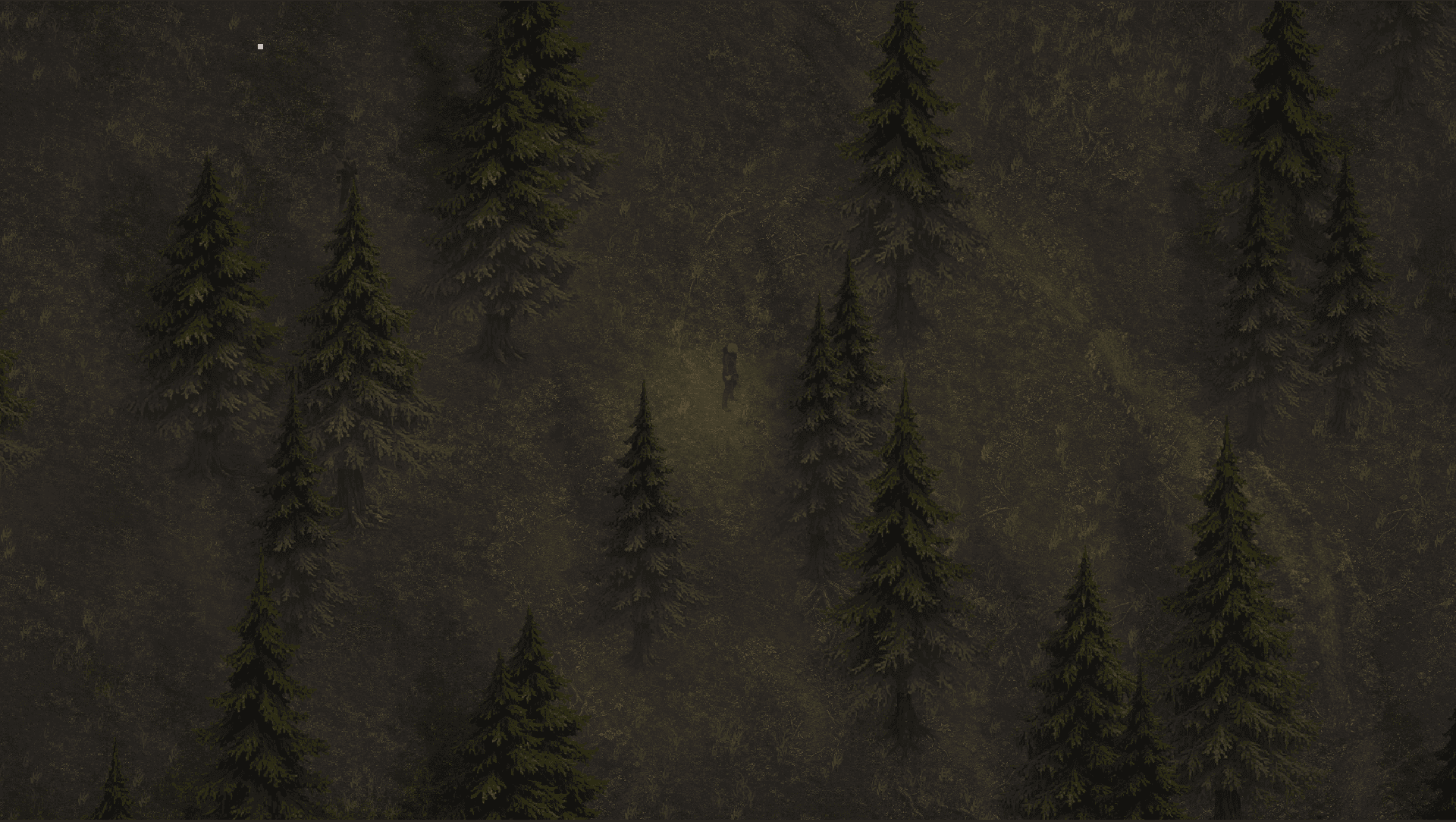
Forest paths, mist and shoreline pressure give the player reasons to leave the hearth, then return with resources and risk.
Current Focus
What matters most in the next playable layer
The near-term shape is practical: strengthen the survival loop, keep the villagers useful, and make every new system explain itself through the world.
- Make warmth, hunger, shelter and recovery easy to understand at a glance.
- Keep villager behavior useful and legible before adding larger settlement complexity.
- Let authored spaces feel alive through pathfinding, weather, grass response and atmosphere.
- Grow logistics through stockpiles, pantries, construction sites and farming rather than abstract menus.