
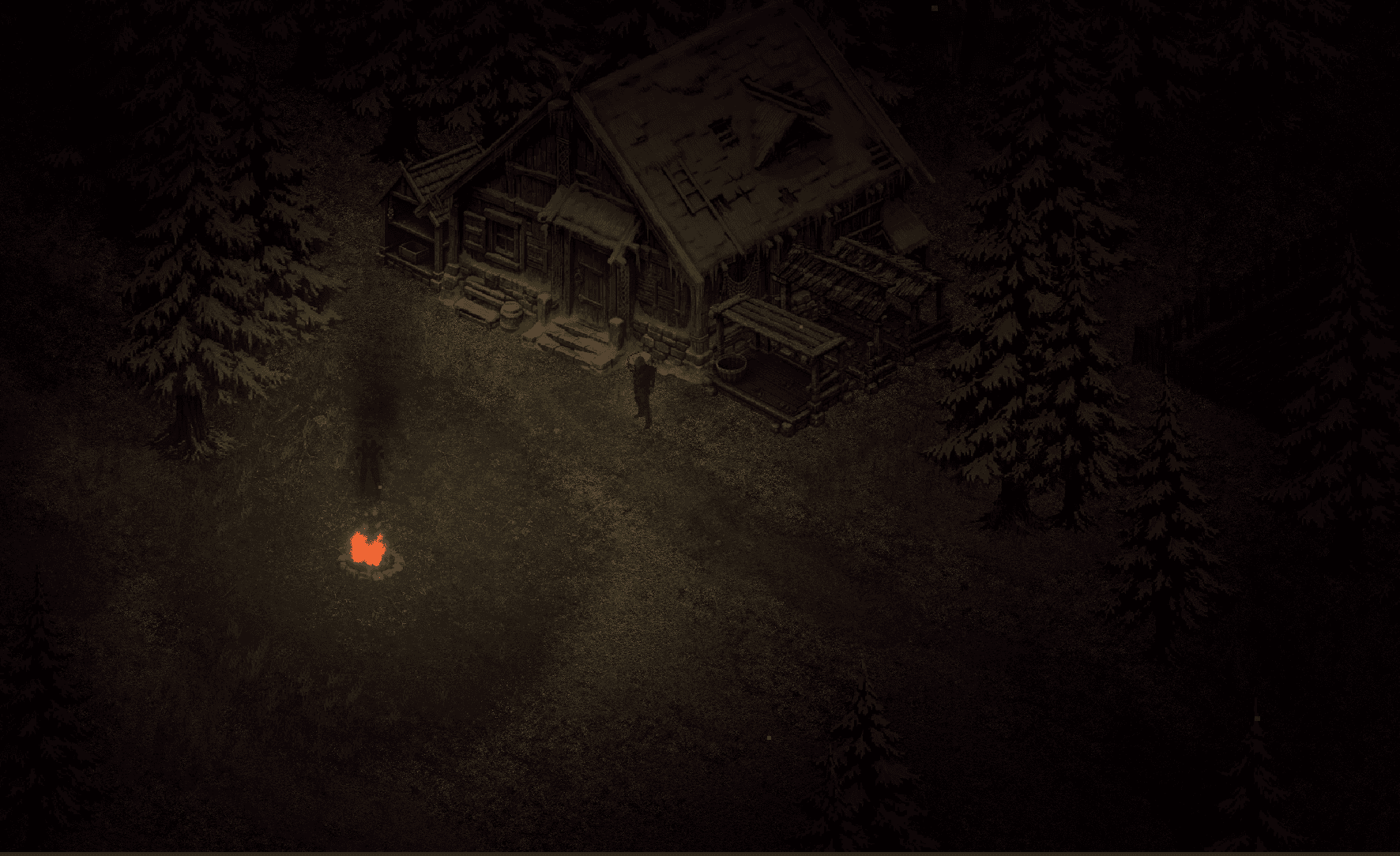
Keeping the Hearth Alive
How Ashen Hearth's campfire design can connect fuel, cooking, warmth and settlement work, informed by a reusable DTWorldz Unity foundation.
Jun 10, 20266 min readBy Deniz TrakaUpdated Aug 31, 2026
Ashen Hearth begins with a damaged home, a cold shoreline and a fire that cannot be treated as permanent scenery. The hearth is intended to connect fuel, warmth, cooking, recovery and daily work around one object the player already understands.
That makes it both the emotional center of the homestead and a useful systems-integration test.
Why A Campfire Is A Good Survival Interface
A survival object is strongest when its state can be read before the player opens a menu. A burning fire communicates warmth and activity. A weak light suggests declining fuel. A dark hearth turns the same clearing into a less secure place.
This is more useful than presenting fuel only as a number in the HUD. The number can confirm the exact state, but the world should communicate the problem first.
In the inspected reusable Unity foundation, the campfire is also a crafting and cooking desk. Adding, consuming or depleting fuel emits explicit state changes. Those events drive the active/inactive animation and the flickering-light response, while restoring fuel after load can reapply the correct presentation without pretending a new interaction occurred.
That event boundary matters. The model owns fuel; the mediator translates state into animation, light, audio, particles and UI. A visual effect should never become the authority on whether the fire still has fuel.
One Object, Several Responsibilities
The hearth touches several systems, but they should not collapse into one giant campfire script.
- Fuel state answers how much burnable material remains.
- Presentation answers whether the animation, light, audio and particles should appear active.
- Crafting and cooking answer which recipes are available and who currently owns the interaction.
- Warmth answers how nearby conditions affect survival state.
- AI work answers whether fuel should be gathered, hauled or delivered.
- Persistence answers which values must survive a reload and in what order they are restored.
Those responsibilities meet at the hearth, but each needs its own contract. This keeps a change to light intensity from corrupting fuel, or a closed crafting screen from changing whether the world considers the hearth lit.
Fuel Creates A Legible Work Chain
The useful loop is longer than “click to refuel.” Wood must exist in the world, reach an inventory or stockpile, become available to an action and finally be added to the fire.
For an autonomous worker, a conceptual refuel task has at least these questions:
- Is the hearth below its desired fuel level?
- Is valid fuel available and not already claimed?
- Can the worker reach the source and the hearth?
- Can the target reserve a delivery position?
- If the job is interrupted, who releases the item and reservation?
This is why the hearth connects naturally to the GOAP villager-routines note. The planner can choose work only when the surrounding resource, navigation and reservation systems expose truthful state.
Warmth Must Be More Than A Radius
It is tempting to make warmth a collider around the fire and call the feature complete. A radius is only the beginning.
A useful warmth system also needs to answer:
- Is the hearth actually active?
- Does distance change the effect?
- How do time of day, season and weather modify exposure?
- Does shelter change the result?
- What happens when several safe sources overlap?
- Can the player understand why warmth is rising or falling?
The reusable survival architecture has a data-driven place for weather warmth modifiers. Clear, rainy, windy, thunderstorm and fog conditions can contribute differently to the environment calculation. This is a useful boundary for Ashen Hearth to preserve: weather reports conditions, the survival layer calculates their effect, and a validated hearth implementation can provide local counter-pressure.
The Weather That Matters article explains that connection in more detail.
Persistence Without False Side Effects
Fuel and lit state are small values with visible consequences, which makes the hearth a useful save/load test.
Loading should restore the saved model state, then update presentation from that result. It should not replay the normal “fuel added” interaction, duplicate inventory consumption, restart a recipe or emit celebratory effects just because the object has been reconstructed.
The distinction between restoring state and performing an action is easy to miss. In the inspected DTWorldz campfire mediator, a dedicated restore path updates light and animation from the restored amount. That is the kind of narrow hook a persistent world needs.
For the wider strategy—schema versions, handler order, validation and backup recovery—see Saving a Systemic Homestead.
Failure States Need To Be Visible
A fire can fail for different reasons:
- no fuel exists;
- fuel exists but is not reachable;
- a delivery target is reserved incorrectly;
- the worker has no valid plan;
- state was restored but presentation did not refresh;
- the light and particles look active while the model is empty.
These failures should not all become the same “villager is idle” symptom. Debug information needs to preserve the boundary between missing resources, failed planning, blocked movement and inconsistent presentation.
That production discipline also improves the player experience. A readable empty stockpile, an unlit fire and a worker unable to find fuel tell a much clearer story than a generic warning icon.
The Emotional Center Comes From The Rules
The hearth should feel important because several understandable needs meet there, not because the game repeatedly calls it important.
Food can be cooked there. Fuel must reach it. Light changes the clearing. Warmth can counter harsh conditions. Workers moving toward it make the settlement feel occupied. When the fire goes out, the same authored space becomes less secure.
Ashen Hearth is still in active development, so the complete social and survival simulation remains a direction rather than a finished promise. The reusable Unity reference is concrete—fuel has state, presentation reacts to it, cooking has an interaction surface and persistence has a restore hook—but Ashen Hearth’s own integrated coverage still requires separate playable verification.
Explore Ashen Hearth or read Farming Before Empire to follow the other half of the first food-and-warmth loop.
Continue reading
Nearby notes in the atlas.
Related entries are connected by the systems and world they document.

Jun 17, 2026 · Ashen Hearth
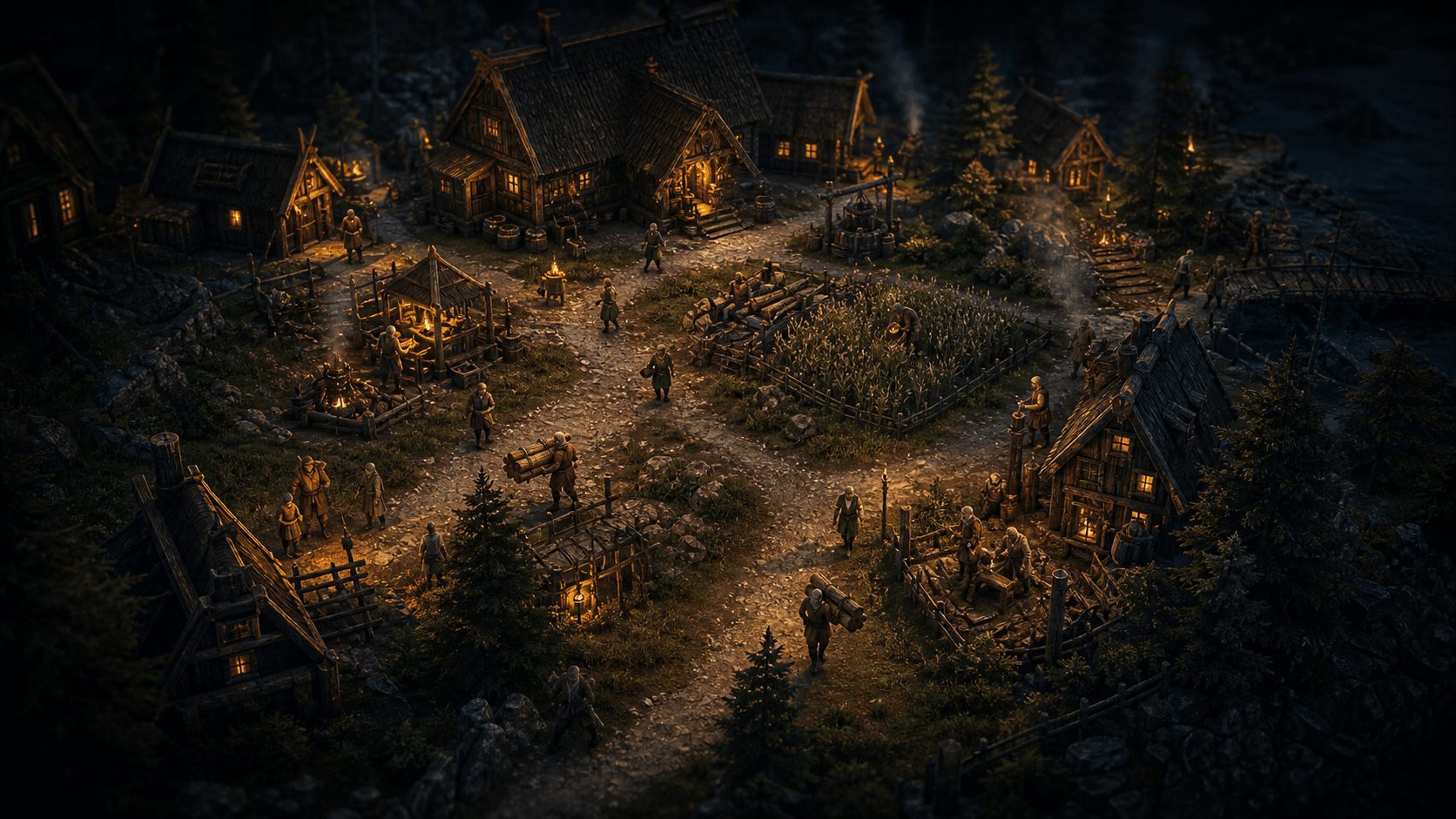
A Fragile Sense of Order
Devlog 01 on the unstable feeling behind Ashen Hearth: scarce resources, passing time, harsh weather and villagers trying to hold the homestead together.
9 min read
Jun 9, 2026 · AI
Villagers With Practical Routines
How a reusable DTWorldz Unity GOAP foundation informs Ashen Hearth villager goals, world-state sensors, actions, replanning and known limits.
6 min read
Jun 8, 2026 · Systems
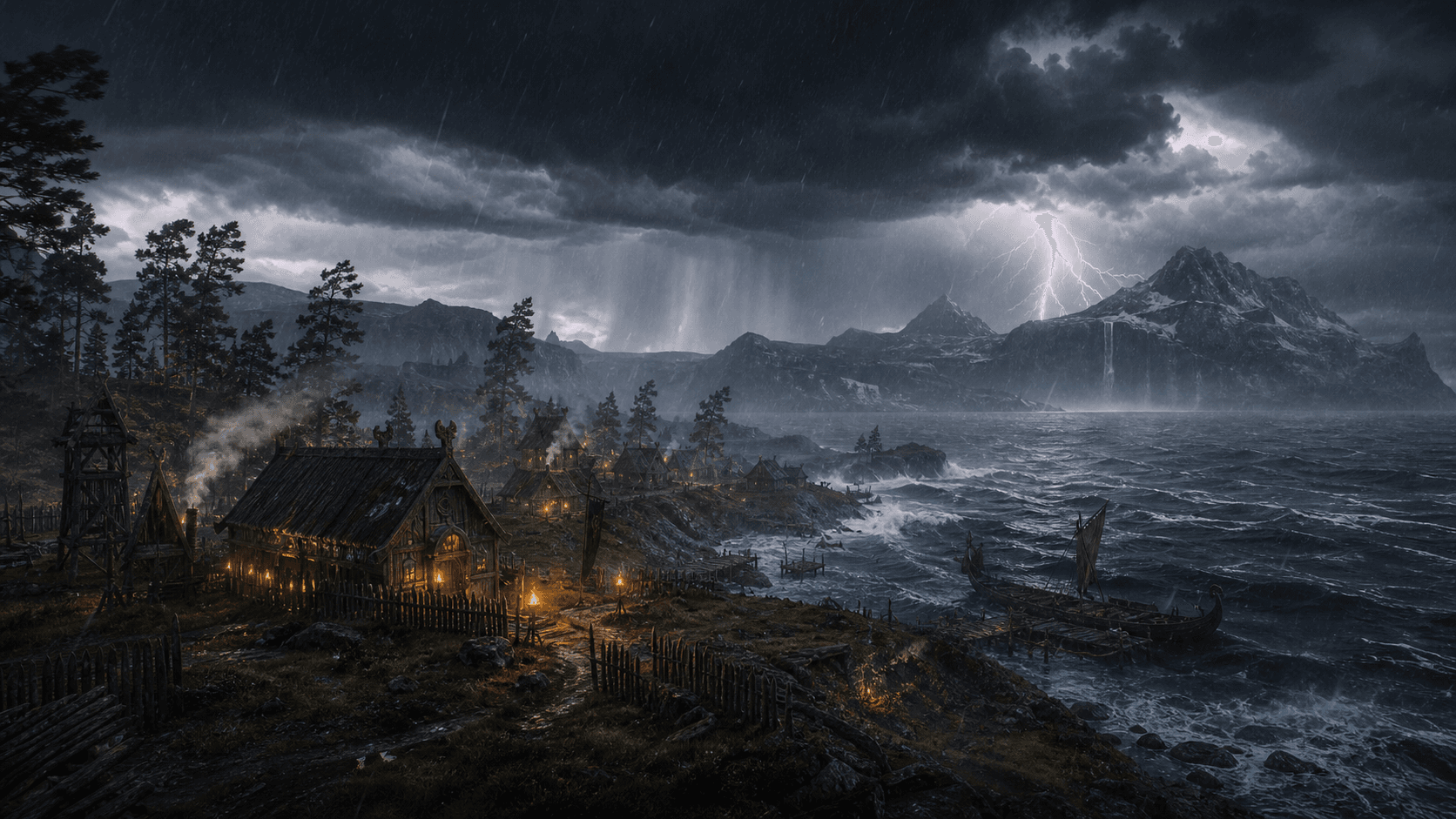
Weather That Matters
How a reusable DTWorldz Unity weather foundation informs Ashen Hearth's time, season, visual and survival design.
6 min read