
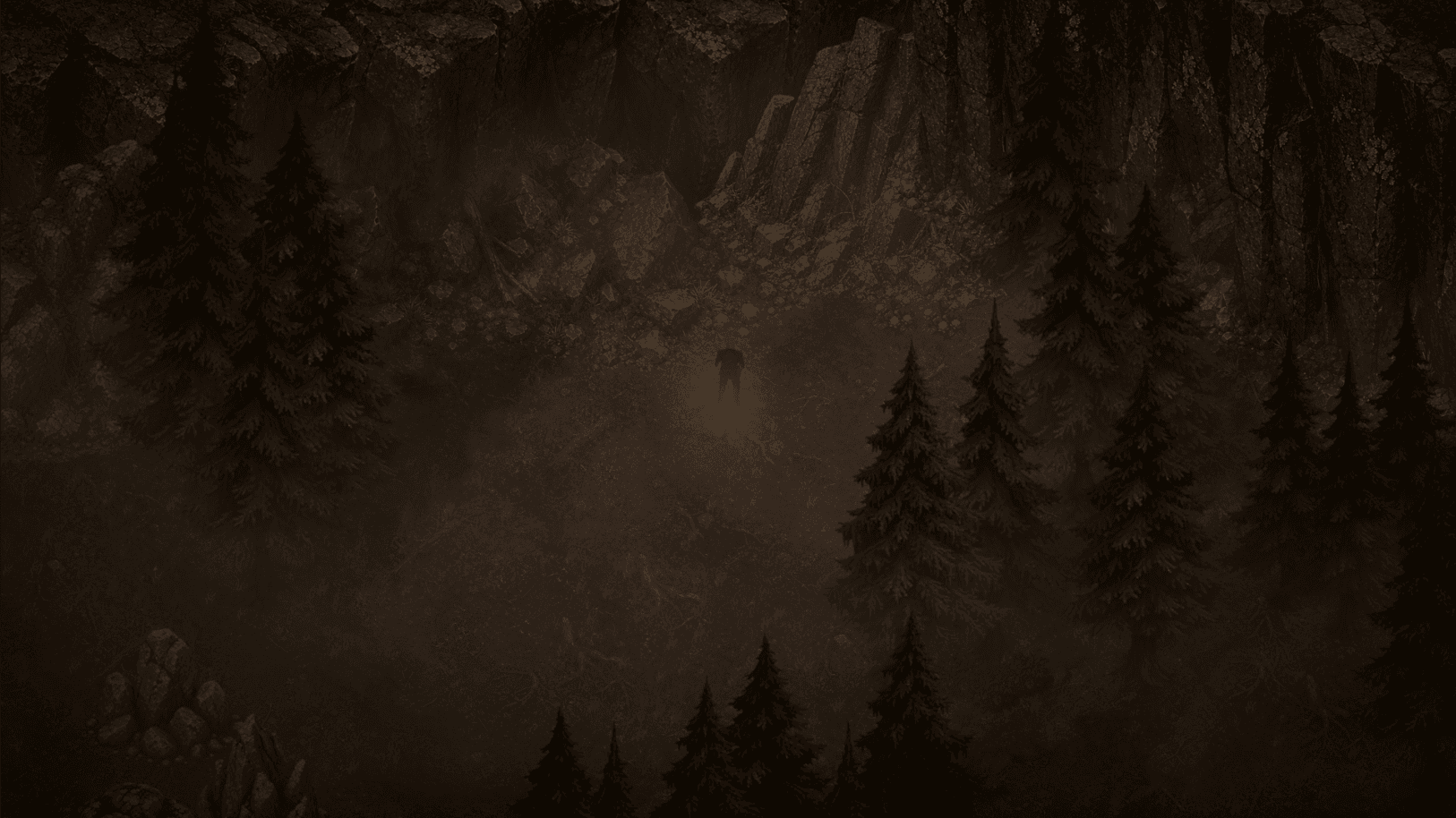
A Fragile Sense of Order
Devlog 01 on the unstable feeling behind Ashen Hearth: scarce resources, passing time, harsh weather and villagers trying to hold the homestead together.
Jun 17, 20269 min readBy Deniz TrakaUpdated Aug 31, 2026
The first video devlog for Ashen Hearth begins with a simple question:
What happens when safety is never guaranteed?
That question has become one of the main creative anchors for the project. Ashen Hearth is not being built as a cozy settlement game where comfort is the default state. It is being shaped around something more uncertain: a small group of people trying to keep a home alive in a world that does not naturally stay ordered.
This first devlog establishes the design target for Ashen Hearth. The linked technical notes go deeper into the Unity architecture behind individual systems; this article stays focused on how those systems should feel when they meet in play.
Not Comfort First
When I think about Ashen Hearth, I do not start with the idea of a safe place. I start with the effort of keeping a place safe for one more day.
That difference matters. A cozy game often promises warmth as a baseline. Ashen Hearth should make warmth feel like something the player creates, protects and sometimes loses. The hearth, the home, the stockpile and the people around them are not just decoration. They are the fragile shape of order inside a harsher landscape.
The fantasy is not about escaping pressure completely. It is about building enough structure to endure it.
A Settlement That Can Be Interrupted
The settlement in Ashen Hearth should never feel like a machine that runs forever once the player places the right objects. It should feel alive enough to be interrupted.
A quiet morning can turn into a day of shortage. A cold evening can make firewood matter more than expansion. Fog, darkness or bad weather can make the same path feel less certain than it did a few minutes earlier.
That is the kind of instability I want the game to hold onto. Not constant disaster, and not random punishment, but the sense that the world is always applying pressure.
Resources With Weight
Resources are easy to flatten into numbers. Wood, stone and food can become little icons in a corner of the UI, abstract enough that the world disappears behind them.
Ashen Hearth needs them to feel more physical than that.
When the player gathers wood or stone, the action should feel connected to a place. Something is taken from the world, carried back, stored, spent and made useful. A piece of wood is not only a resource count. It can become warmth, construction, survival time or the difference between a stable night and a dangerous one.
That is why gathering and hauling matter so much to the current prototype. Carrying resources back to the homestead gives the player a readable connection between effort and survival. The settlement is not maintained by invisible automation alone. It is maintained by movement, labor and decisions.
Time As Pressure
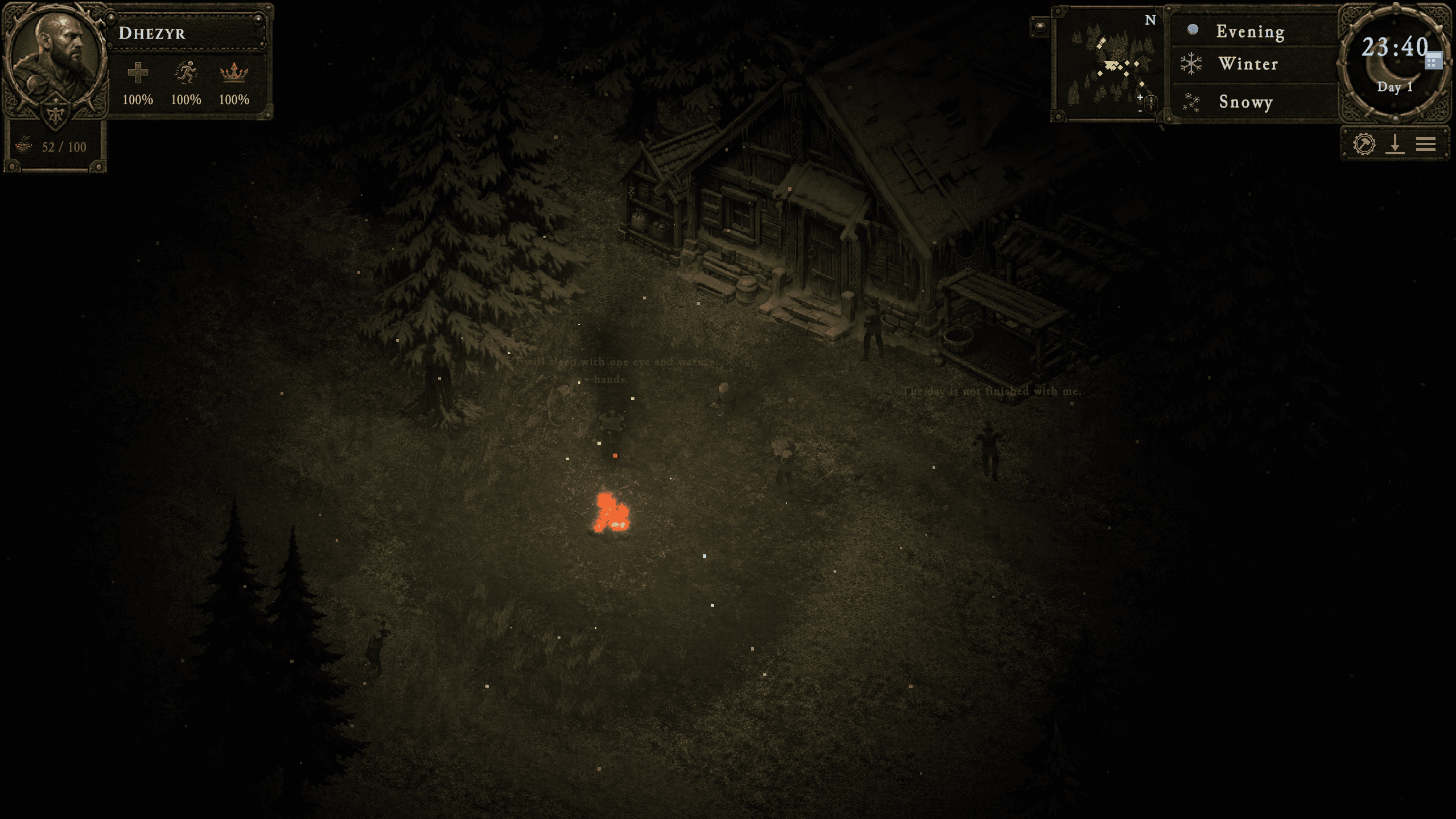
Time in Ashen Hearth should do more than move the sun across the sky.
A passing day should make the player think about what was finished, what was delayed and what still needs to be protected before night comes back. The point is not to rush the player every second. The point is to make stillness have a cost.
If the player waits too long, food may not be where it needs to be. Firewood may not be ready. People may be exposed to conditions they cannot ignore. The settlement can survive for now, but "for now" is the important part.
The day-night rhythm, weather shifts and seasonal pressure all support the same feeling: survival is not one solved problem. It is a pattern that has to be maintained.
The implementation boundary matters here. Time publishes the clock; seasons derive from elapsed days; weather selects a condition; survival rules interpret that condition. The dynamic-weather breakdown explains why those layers are kept separate instead of letting a particle effect become gameplay authority.
Weather That Changes The Meaning Of A Place
Atmosphere is one of the strongest ways to make a world feel unstable.
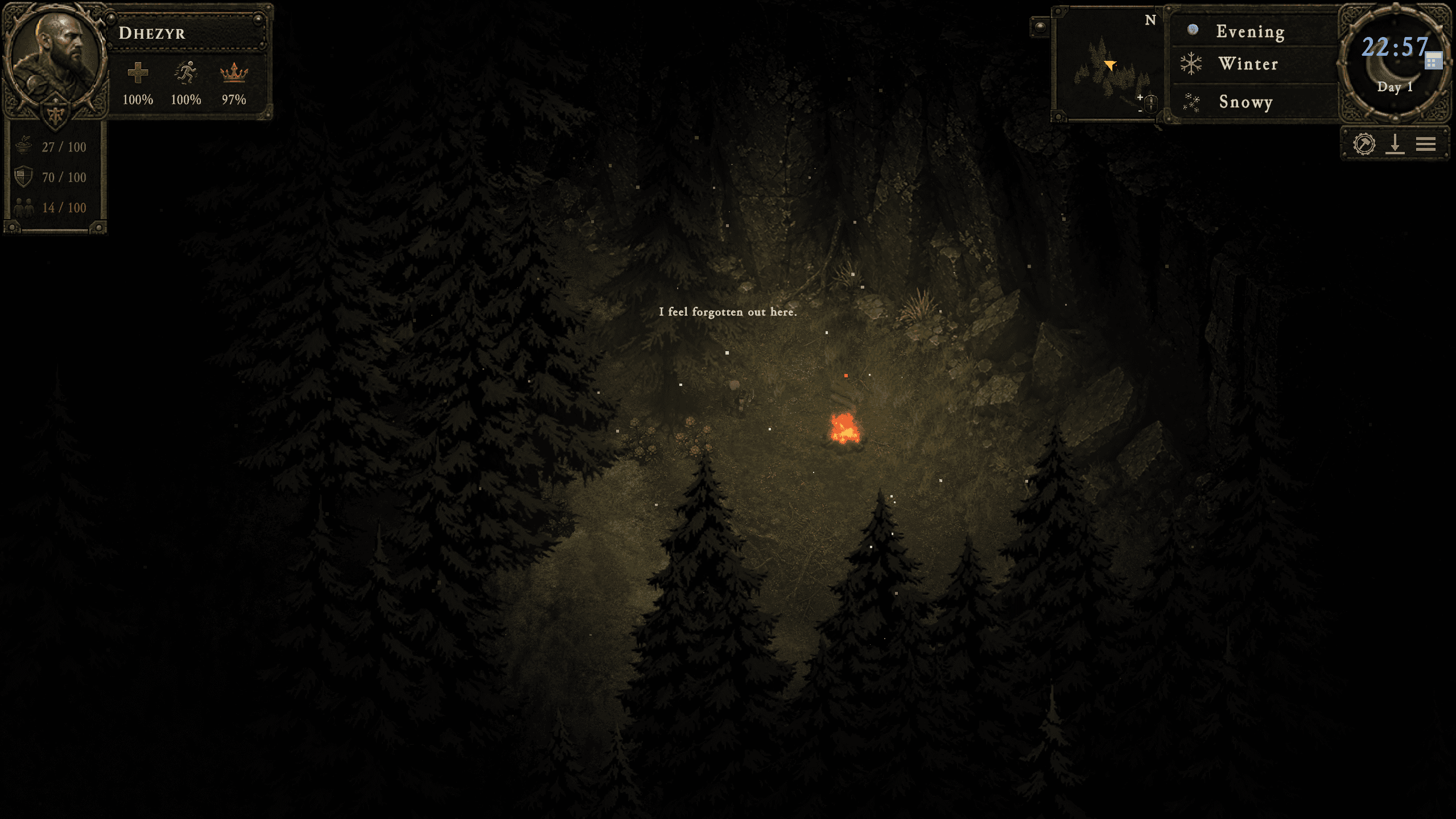
Fog, wind, darkness, snow, sound and light should not feel like a layer placed on top of the game after the systems are done. They should change how the player reads the same location.
A path through the trees can feel calm in daylight and uncertain at night. A home can feel ordinary when the weather is clear and precious when the cold presses in. A campfire can be a visual detail in one moment and the emotional center of the scene in another.
This is where Ashen Hearth can become heavier without needing to explain everything through UI. The player should feel the weather first through the world, then understand it through the systems.
People Inside The Pressure
The villagers are important because they make the pressure human.
I do not want them to feel like simple units placed on a map to execute tasks. They should feel like people trying to exist inside the same unstable world as the player. They gather, haul, work, rest, seek warmth and depend on the settlement around them.
That does not mean the current prototype is pretending to be a finished life simulation. The direction is more practical: villagers need routines that are readable, useful and connected to the survival loop.
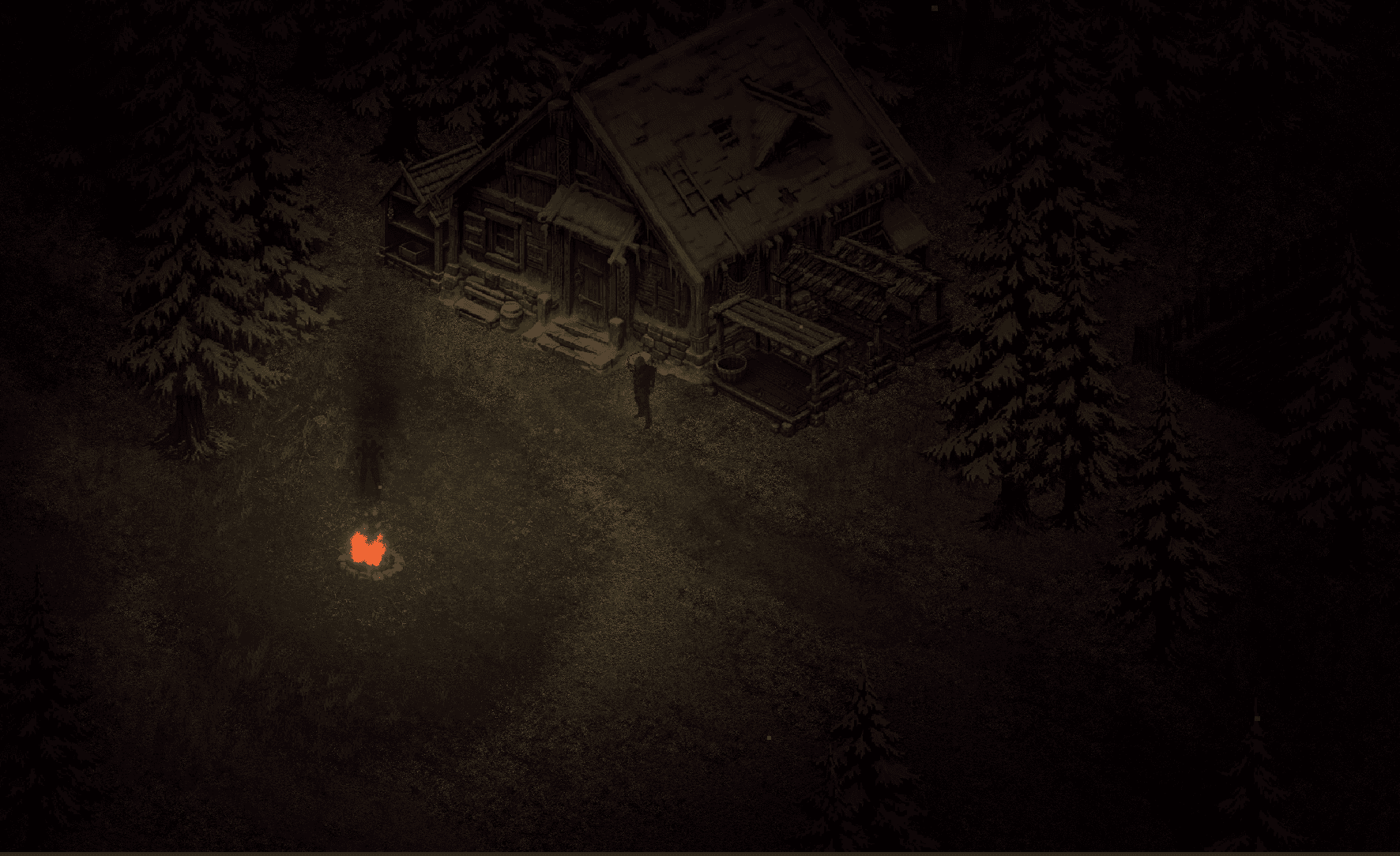
If a villager goes to warm themselves by the fire, that should say something about the world. If someone carries supplies home, that should feel like part of keeping the place alive. If the settlement becomes more organized, the people inside it should make that order visible.
The planner cannot create that meaning by itself. Sensors, goals, action preconditions, reservations, navigation and failure recovery all need explicit ownership. Villagers With Practical Routines documents the reusable GOAP reference behind this design—including what that planner still does not optimize and what remains unverified in Ashen Hearth itself.
Building From A Clear Feeling
Ashen Hearth is still early. Visuals will change. Animations will improve. Systems will become deeper. Some parts of the prototype are foundations rather than final features.
But the direction is clear.
The game is not about reaching a perfect state of safety. It is about trying to hold a fragile order together while the world keeps pushing back.
That idea affects almost every part of development:
- Resources should feel gathered, carried and spent in the world.
- Time should create pressure without becoming noise.
- Weather should change the emotional shape of familiar places.
- Villagers should make the survival loop feel human.
- The homestead should feel cared for, not simply owned.
How The Systems Support One Another
The first playable loop becomes clearer when every system supplies a fact or consequence another system can use:
| System | State it owns | Why the player cares |
|---|---|---|
| Time and weather | Current hour, season and conditions | Work has a changing context instead of happening in a timeless scene |
| Hearth | Fuel and active presentation | The center of safety can weaken visibly |
| Farming | Crop lifecycle and harvestable state | Food has a place, a delay and work attached to it |
| AI | Sensed facts, goals and current actions | Settlement needs become movement the player can observe |
| Persistence | Stable identity and saved state | The world remembers effort instead of resetting its story |
These are not five separate feature checkboxes. Weather makes warmth more valuable. Fuel makes gathering and hauling useful. Farming creates food work over time. Persistence lets the result remain true tomorrow.
The practical write-ups on farming, the hearth and save/load architecture each trace one of those connections.
What This Devlog Does Not Promise
Ashen Hearth remains in active development. The scenes and systems shown here establish a direction, not a claim that every economy, villager personality, season or production chain is complete.
That distinction protects the design. A small loop can be evaluated honestly: does the player understand why the fire matters, why food moves through the homestead and why a change in weather creates pressure? Larger village simulation only helps after those relationships are readable.
There is also a trade-off in building systems this way. Connections make the world convincing, but they create more restoration, debugging and feedback responsibilities. When a worker cannot refuel a hearth, the cause might be resource availability, reservation ownership, navigation, planner state or a presentation mismatch. The architecture has to preserve those boundaries so the team can diagnose the real failure.
What Comes Next
Future devlogs will go deeper into the systems behind this feeling: gathering, hauling, weather, the hearth, villager routines, food production and the way the settlement responds over time.
For now, this first devlog is about the emotional target.
Not comfort.
Not perfect safety.
The feeling of trying to keep something together in a world that will not stay still.
That is the direction I want Ashen Hearth to move toward.
Continue reading
Nearby notes in the atlas.
Related entries are connected by the systems and world they document.
Jun 10, 2026 · Ashen Hearth
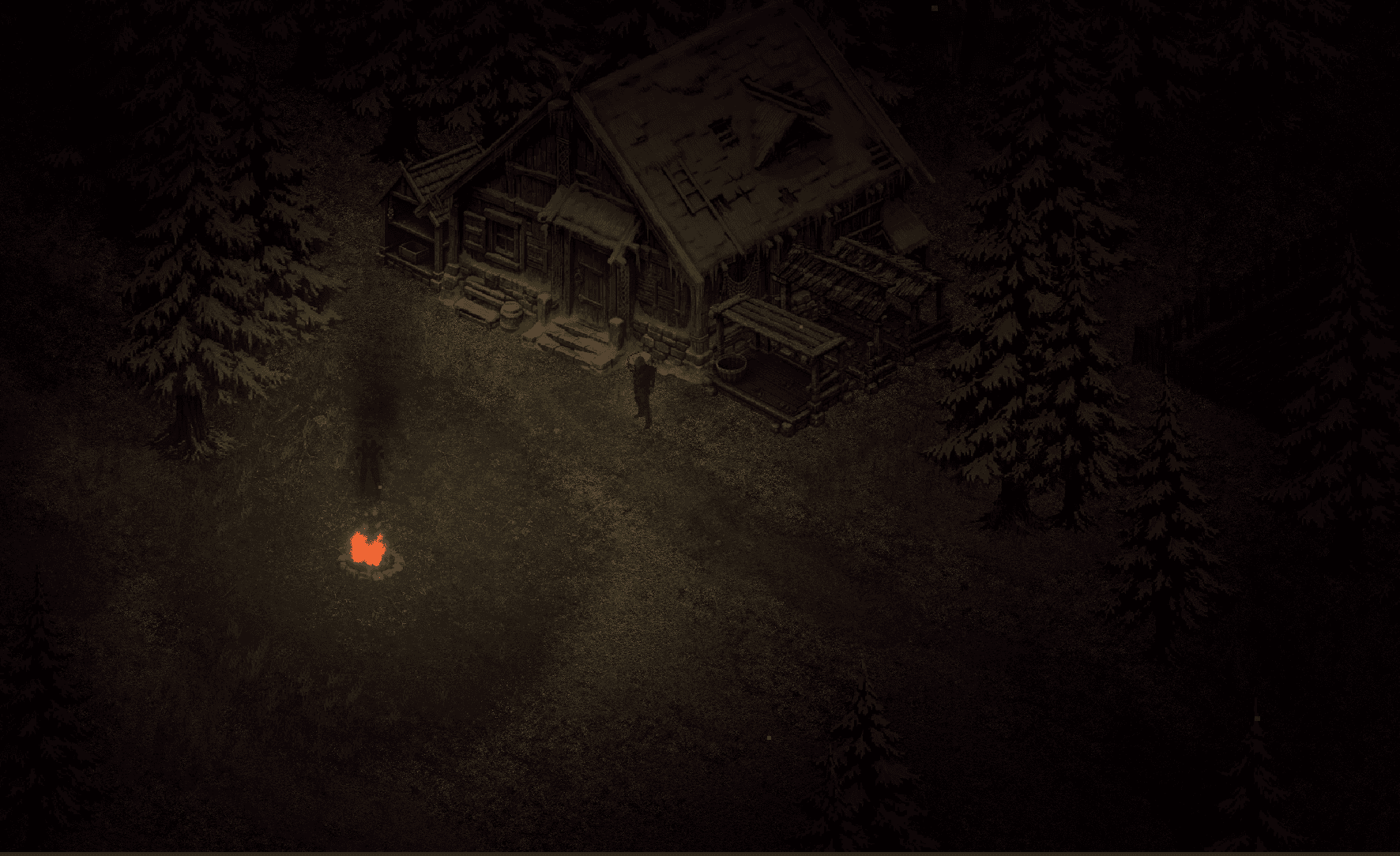
Keeping the Hearth Alive
How Ashen Hearth's campfire design can connect fuel, cooking, warmth and settlement work, informed by a reusable DTWorldz Unity foundation.
6 min read
Jun 9, 2026 · AI
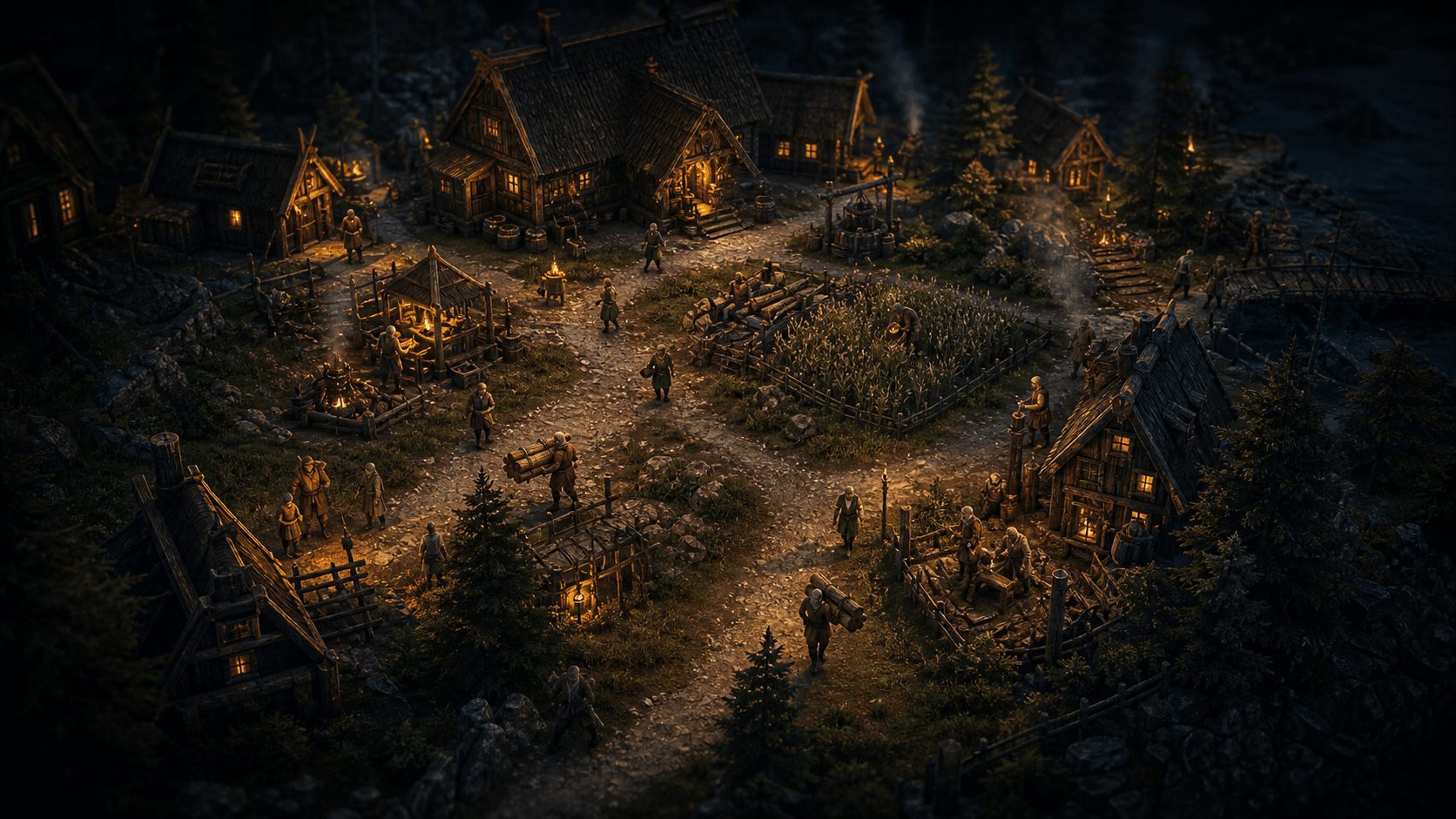
Villagers With Practical Routines
How a reusable DTWorldz Unity GOAP foundation informs Ashen Hearth villager goals, world-state sensors, actions, replanning and known limits.
6 min read
Jun 8, 2026 · Systems
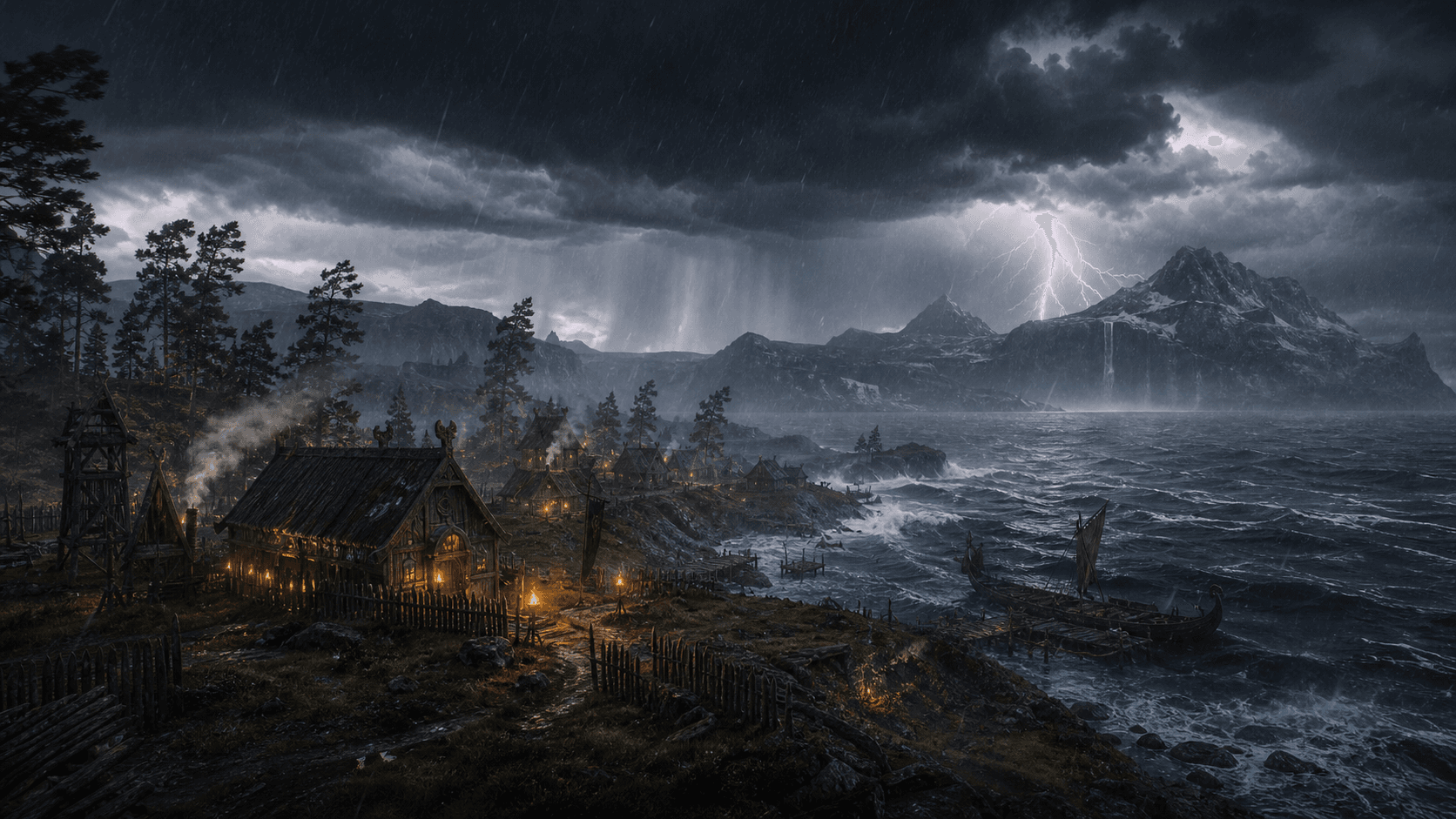
Weather That Matters
How a reusable DTWorldz Unity weather foundation informs Ashen Hearth's time, season, visual and survival design.
6 min read