
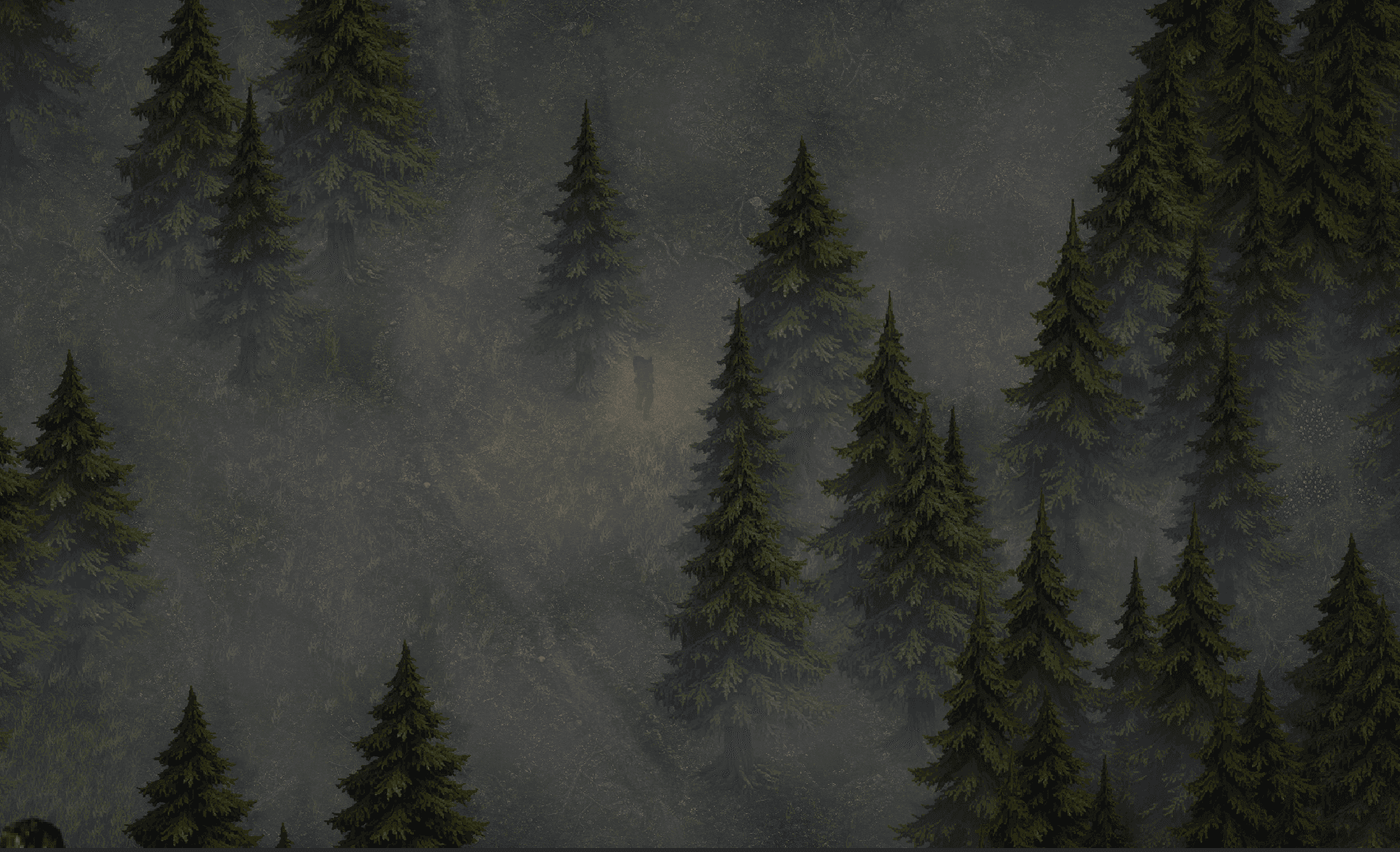
Authoring a Living Homestead
Why Ashen Hearth builds its first survival homestead by hand, then layers Unity pathfinding, weather and world-response systems over that authored space.
Jun 5, 20265 min readBy Deniz TrakaUpdated Aug 31, 2026
For Ashen Hearth, the useful answer to authored world or procedural world is not “pick one technology forever.” The first survival homestead is authored by hand because its distances, sightlines and work areas must explain the game. Runtime systems then make that fixed place respond to movement, weather, time and use.
That boundary gives the opening hours a deliberate shape without freezing the world into a painted backdrop.
What “Authored” Means In Practice
An authored space is more than a pretty scene assembled before play. Its layout carries gameplay information.
The home, campfire, fields, stockpiles, shoreline, paths and forest edge can be positioned around the first survival loop. A player should be able to look across the clearing and understand where warmth comes from, where food is produced, where supplies are stored and where the safety of the homestead ends.
The intended Unity authoring direction uses editable scene objects, tilemaps and prefabs rather than one opaque runtime generator owning the whole map. Ground, blockers, paths and building footprints need explicit authored ownership so navigation can respond when the layout changes.
The important production benefit is inspectability. If a villager takes an awkward route, a designer can inspect the relevant tile, footprint or path cost. If a work area feels too far from storage, the scene can be changed directly. The answer remains in authored project data instead of being buried inside a random seed.
Runtime Systems Still Change The Place
Hand-authored does not mean static. The Ashen Hearth design separates the topology of the homestead from the systems intended to make it feel used.
Planned or prototype response layers documented across the project include:
- day and season progression;
- weighted weather changes and weather presentation;
- pathfinding and road-aware movement;
- crop state and other persistent world state;
- grass, trace and surface-response presentation;
- audio and lighting that react to the time or conditions.
These systems should not redraw the entire level to prove that the world is alive. They change the meaning of what is already there. A short path between the house and hearth is ordinary in clear daylight, but more valuable during bad weather. A field is the same authored footprint before and after planting, yet its crop state makes it read as unused ground, active work or available food.
The weather-system note explains how time, season, weighted weather and survival modifiers are kept as separate responsibilities. The save-system note covers the persistence boundary that lets those runtime changes survive a reload.
Why Not Generate The First Homestead?
Procedural generation is useful when variation, replayability or very large spaces are the primary problem. It is less useful when the team is still learning what the first ten minutes need to communicate.
Generating the opening homestead would introduce several questions at once:
- Can every seed place food, warmth, storage and shelter at understandable distances?
- Can navigation always reach those objects after construction changes the map?
- Does every generated sightline preserve the intended isolation and atmosphere?
- Can a failed layout be reproduced and diagnosed quickly?
- Will save data still identify the right runtime entities after the world is rebuilt?
Those are solvable problems, but they are not free. Solving them before the core loop is readable would make iteration slower, not more ambitious.
Authored placement lets the team tune one known arrangement first. Only after that arrangement proves what the systems require is it sensible to decide which parts benefit from procedural variation.
The Trade-Off
The cost of this approach is obvious: an authored map does not automatically create infinite replayable worlds. Every meaningful expansion needs level-design attention, and runtime response layers can expose assumptions that were invisible when the scene was placed.
The benefit is control. The team can protect pacing, composition and navigation while the survival loop is still unstable. It can also keep important content editable through normal Unity scenes and assets rather than forcing every change through generator code.
That does not rule out procedural systems elsewhere in the project. It sets a narrower public promise for Ashen Hearth: the homestead shown on the site is designed as a deliberate place first.
A Practical Decision Test
For each world feature, we ask what kind of ownership makes it easiest to understand and maintain:
- Does placement carry narrative or tutorial meaning? Author it.
- Does the value change often during play? Give it a runtime state owner.
- Must the change survive save/load? Give it stable identity and a persistence contract.
- Is variation the actual player value? Consider procedural generation, but make the result reproducible and validatable.
- Can a designer inspect and tune the result? If not, the tool boundary probably needs work.
This is the same systems-first approach used across the project. An authored clearing gives the player a readable home. Runtime weather, time, work and persistence make that home feel temporary, pressured and lived in.
Where The Homestead Goes Next
The immediate target is not a bigger map claim. It is a more convincing relationship between the spaces already present: a field connected to food, storage connected to hauling, the hearth connected to warmth, and paths connected to the daily movement of the settlement.
Explore Ashen Hearth for the current game overview, or continue with the notes on GOAP-driven routines, farming and food production, and keeping the hearth alive.
Continue reading
Nearby notes in the atlas.
Related entries are connected by the systems and world they document.
Jun 6, 2026 · Systems
Saving a Systemic Homestead
How DTWorldz approaches Unity saves with stable IDs, ordered restoration, schema migration, runtime entities and atomic backup recovery.
7 min read

Jun 17, 2026 · Ashen Hearth
A Fragile Sense of Order
Devlog 01 on the unstable feeling behind Ashen Hearth: scarce resources, passing time, harsh weather and villagers trying to hold the homestead together.
9 min read
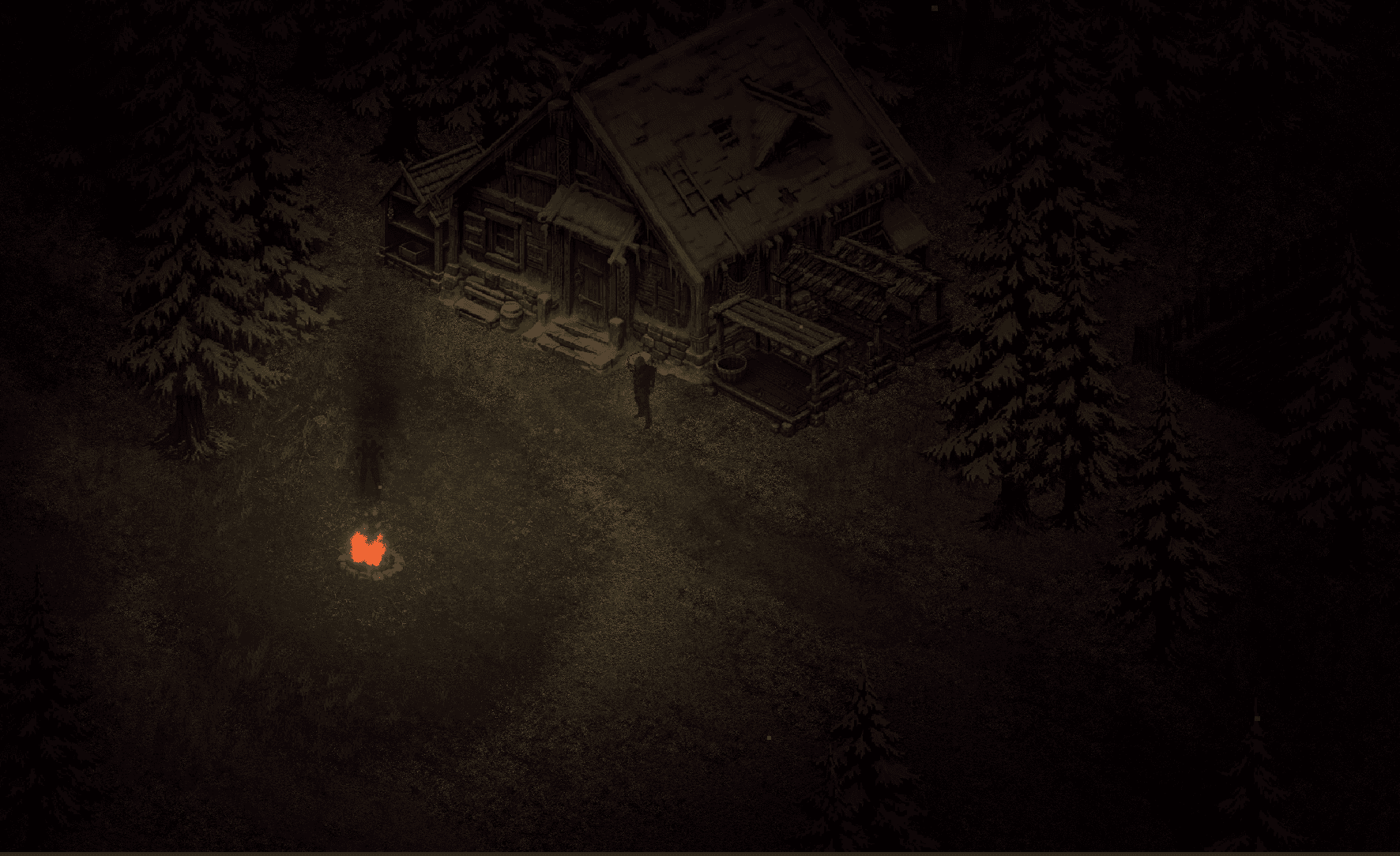
Jun 10, 2026 · Ashen Hearth
Keeping the Hearth Alive
How Ashen Hearth's campfire design can connect fuel, cooking, warmth and settlement work, informed by a reusable DTWorldz Unity foundation.
6 min read